
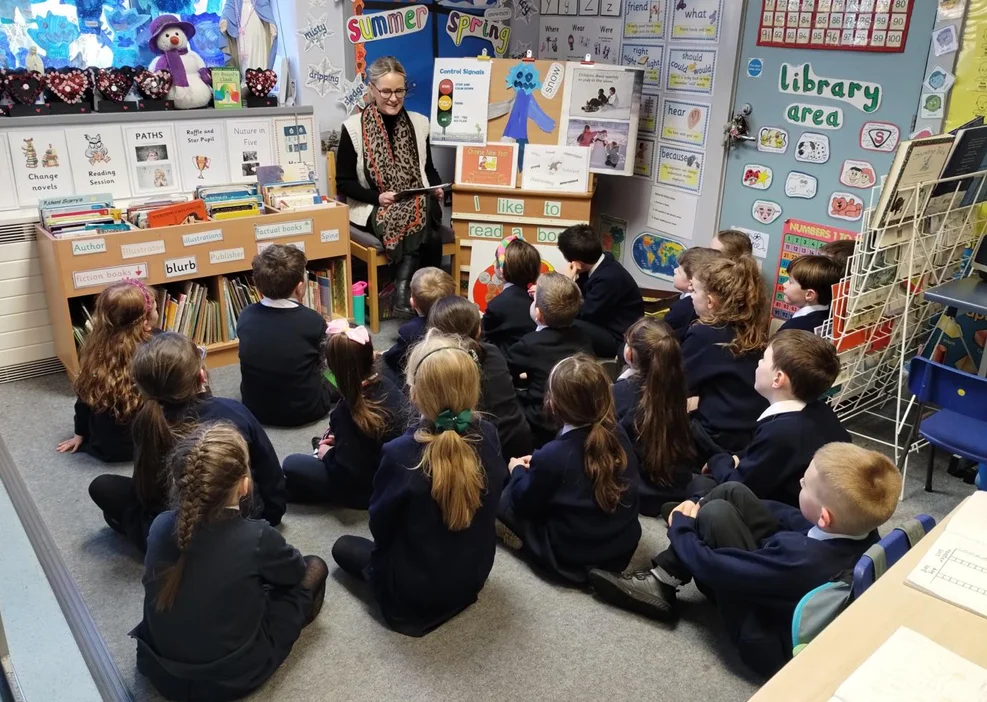
The Gaining Resilience and Optimising Wellbeing (GROW) programme was developed to address growing concerns about young children’s emotional wellbeing in Northern Ireland, where rates of anxiety and depression are significantly higher than the UK average (Bunting et al., 2020). Delivered across eight primary schools, GROW aimed to strengthen protective emotional skills in children aged 4–7 through structured, story-based emotional learning. Using Verbal’s Creative Guided Reading model, the programme combined original wellbeing-themed stories with psychologically informed discussion prompts to promote emotional regulation, empathy, and resilience in a classroom setting.
Findings from this post-programme evaluation indicate that GROW had a significant and measurable impact on children’s mental health and socialemotional development. Quantitative analysis revealed statistically significant improvements in wellbeing scores (t(162) = 2.23, p = .027), with 43% of children reporting increased emotional wellbeing. Additionally, 69% of children improved in their ability to manage emotions, with specific gains in selfregulation, empathy, and selfawareness. Resilience scores also improved for 44% of participants, suggesting increased capacity to recover from setbacks and regulate distress.
Qualitative feedback supported these findings. Children described feeling calmer, more confident, and more aware of their emotions. They reported learning to be kind to themselves and others, to believe in themselves, and to seek help when worried. Teachers observed that children became more confident discussing emotions and saw improved participation, even among children with additional needs. The
storytelling approach helped create safe, engaging spaces for reflection and emotional development.
The programme's design using literature and discussion as a therapeutic medium aligns with broader research on affective bibliotherapy (Shechtman & Nir-Shfrir, 2008; Heath et al., 2005) and early SEL interventions (Durlak et al., 2011). GROW’s classroom-based delivery model ensures the approach is inclusive, accessible, and sustainable within educational settings. It supports early prevention goals outlined in national mental health strategies by embedding wellbeing education into everyday learning.
In conclusion, GROW demonstrates that structured, story-based wellbeing programmes can play a vital role in developing emotional literacy and resilience in early childhood. It offers a scalable, evidence-informed model for improving children’s mental health outcomes and equipping them with tools to thrive both socially and emotionally.
To read the full report, please click here.