
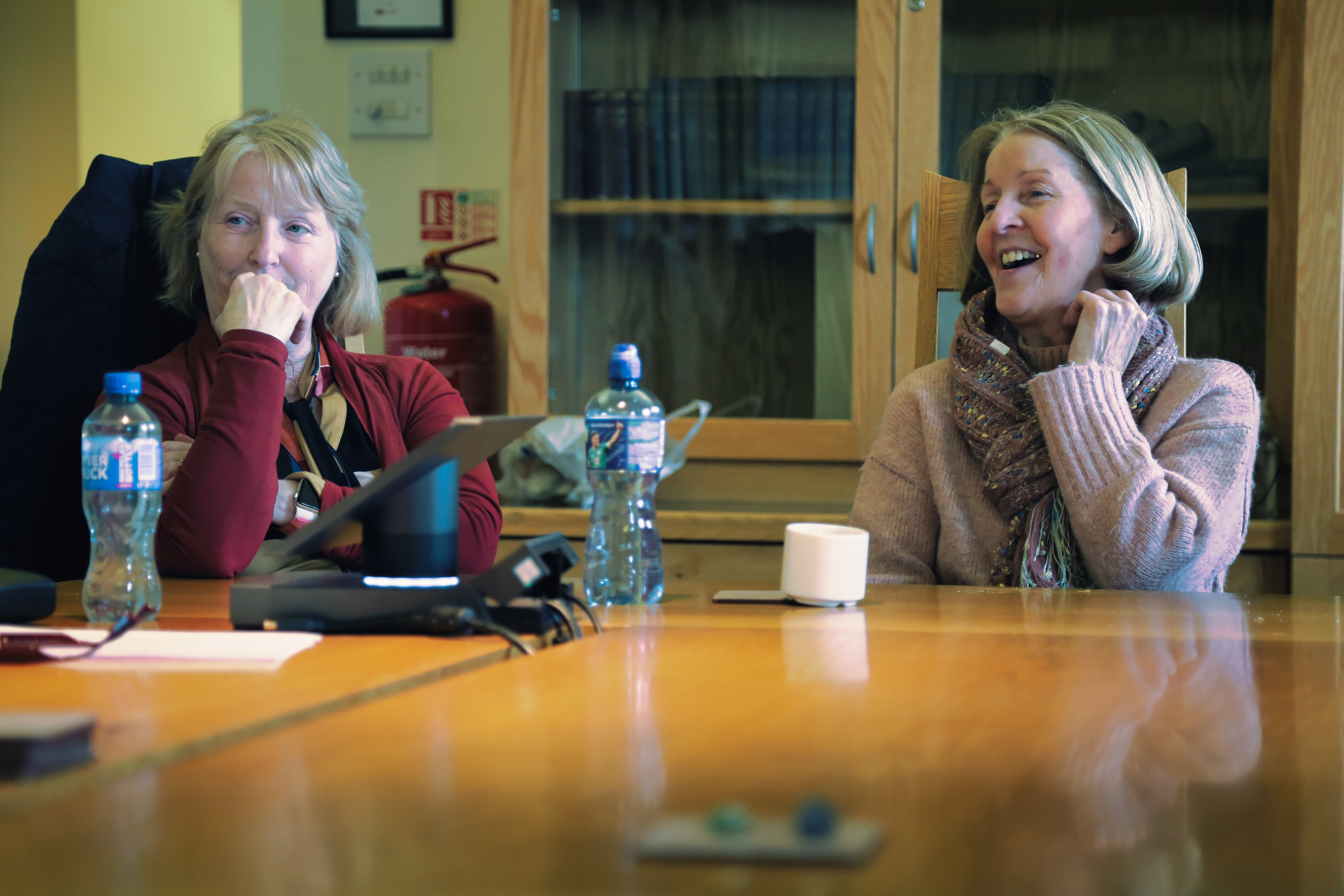
This project was supported by the LFT Charitable Trust. Verbal developed and delivered a dyadic six-week Shared Reading pilot programme to improve mental wellbeing, foster connections, and build relationships for those with early stage dementia and their caregivers.
A dyadic intervention design was selected to improve the wellbeing of both those with early-stage dementia and their caregivers. While a diagnosis of early stage dementia is associated with poor wellbeing and social withdrawal (Caddell & Clare, 2012), caring for and supporting someone with dementia can also lead to poor wellbeing and social isolation (Messina et al., 2022).
We designed a Shared Reading programme to help overcome challenges such as low mood and social isolation for both those with early-stage dementia and their caregivers. This programme targeted aspects of positive wellbeing such as forging social connections, the importance of self-care and more.
This intervention was delivered at the Verbal Arts Centre in Derry~Londonderry. Sessions were facilitated and co-facilitated by Verbal volunteers and employees respectively who had completed Dementia Awareness Training.
Anxiety scores significantly reduced in 60% of participants with early-stage dementia, with depression scores improving in 40% of participants. The most notable wellbeing improvements included participants feeling less troubled by negative thoughts and feeling more happy and content during their day.
Caregivers embraced taking part in the programme and wrote their own poems for self-expression. They also provided feedback on directly observing changes in their loved ones and the joy that it brought to them as a carer, highlighting the benefits of a dyadic intervention and including caregivers when improving wellbeing for those with dementia.
All participants enjoyed taking part in the programme and would take part in a similar programme again. Participants enjoyed the storytelling nature of the programme as it encouraged others to share their stories and their experiences of living with dementia. The ability to discuss the stories and share their own stories helped participants to spend time with and make friends with others.
The findings of this programme not only demonstrate the benefits of arts-based interventions in improving wellbeing and fostering friendships for those with early stage dementia, but highlight the benefits of a dyadic intervention design by encouraging their caregiver to take part and share their story also.
To read the full report, please click here.